Have you ever woken up while camping and discovered that the inside of your tent was wet? Maybe there were water droplets on the walls, your sleeping bag felt damp, or moisture was dripping from the ceiling.
If it wasn’t raining, you might wonder where all that water came from.
Tent condensation is a common problem, especially during fall camping when daytime temperatures are comfortable but nights get chilly.
Fortunately, there are several ways to reduce condensation inside a tent without buying expensive camping equipment.
Here’s how to prevent condensation in a tent, keep your sleeping gear dry, and enjoy a more comfortable night’s sleep outdoors.
Why Does Condensation Form Inside a Tent?
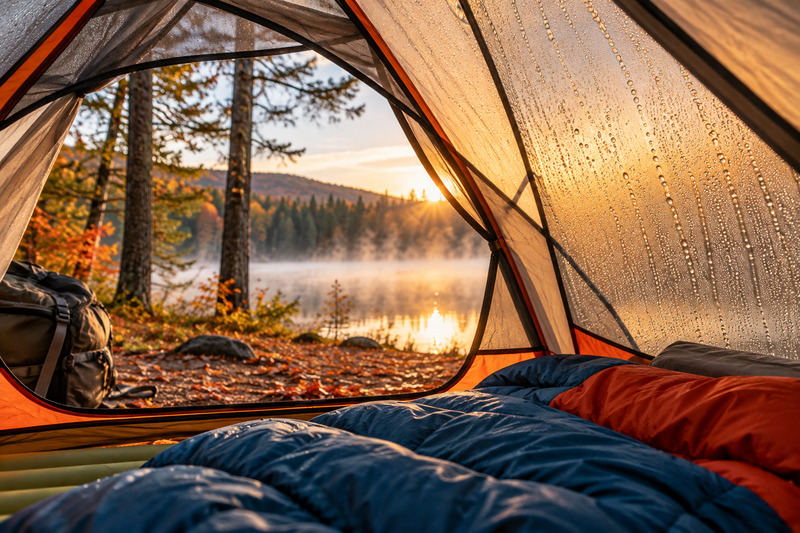
Condensation happens when warm, moist air comes into contact with a colder surface.
When you’re sleeping inside a tent, your breathing releases moisture into the air. That moisture can collect on the cooler tent walls or rainfly as temperatures drop overnight.
Wet clothing, damp shoes, and humid weather can add even more moisture.
Condensation is especially noticeable during cold weather because the temperature difference between the inside and outside of the tent can be greater.
You might notice:
- Water droplets on the inside of your rainfly
- Damp tent walls in the morning
- Moisture collecting near the ceiling
- A wet sleeping bag where it touches the tent
- Water dripping when the tent fabric moves
- Dampness even though it hasn’t rained
Some condensation is normal, even in a well-designed tent.
The goal isn’t necessarily to eliminate every drop of moisture. It’s to reduce the buildup and keep your sleeping area as dry as possible.
1. Keep Your Tent Vents Open
One of the best ways to prevent condensation inside a tent is to improve ventilation.
It might seem strange to open vents when the weather is cold, but trapping warm, humid air inside your tent can make condensation worse.
Fresh air helps carry moisture away before it collects on the fabric.
How to ventilate a tent in cold weather
Start by opening the built-in vents near the top of your tent.
If the weather allows, partially open a window or door to create additional airflow.
Many tents have vents designed to remain open even when the rainfly is attached.
Try opening vents on opposite sides of the tent to encourage cross ventilation.
Make sure your openings won’t allow rain or blowing snow to enter.
Camping tip: Don’t close every vent simply because the temperature drops. Your sleeping bag and insulated sleeping pad should provide most of your warmth, not trapped air inside the tent.
For more advice about staying comfortable overnight, read my guide on how to sleep comfortably in a tent.
2. Choose a Dry Campsite
Where you pitch your tent can make a difference in how much condensation develops overnight.
Low areas often collect cool, damp air.
If you set up your tent in a hollow or depression, you may wake up to more moisture than you would on slightly higher ground.
Where should you pitch your tent?
Look for an established campsite with firm, well-drained ground.
Avoid:
- Low spots where water collects
- Marshy or soggy areas
- Depressions that trap cold air
- Locations immediately beside streams or lakes when a drier campsite is available
- Areas where runoff could flow beneath your tent
A sheltered site beneath healthy trees may sometimes experience less condensation than a completely exposed clearing.
However, always check for dead branches, damaged trees, and other overhead hazards before setting up.
Choose an established campsite rather than clearing vegetation or damaging the surrounding area.
3. Keep Wet Clothing Outside Your Sleeping Area
Wet clothing is another common source of moisture inside a tent.
If you’ve been hiking in the rain or walking through wet grass, your jacket, boots, and socks may contain quite a bit of water.
Bringing everything into your sleeping area adds moisture to the air.
As the temperature drops, that moisture can contribute to condensation.
What should you do with wet camping gear?
If your tent has a covered vestibule, use it to store wet boots and rain gear when appropriate.
Keep the items protected from rain without blocking ventilation.
You can also store damp gear in a separate waterproof bag temporarily, although it should be dried as soon as practical.
Avoid hanging soaking-wet clothes inside your tent overnight.
If you’re camping for several days, take advantage of dry weather to air out clothing and sleeping equipment.
Keeping your sleeping clothes separate from your daytime clothing is another simple way to stay comfortable.
4. Make Sure Your Rainfly Is Set Up Correctly
Your rainfly plays an important role in keeping your tent dry.
On a double-wall tent, the rainfly is the outer waterproof layer that protects the inner tent from rain.
It also provides a surface where moisture can condense.
When the rainfly is installed correctly, much of that condensation should remain separated from your sleeping area.
Check these things when setting up your tent
- Make sure the rainfly is positioned correctly.
- Stake out the tent according to the manufacturer’s instructions.
- Tighten the rainfly so it doesn’t sag against the inner tent.
- Use the provided guylines when needed.
- Keep the designed ventilation openings clear.
- Maintain the intended gap between the rainfly and inner tent.
If the rainfly touches the inner tent, moisture may transfer to the inner fabric.
A properly tensioned rainfly also helps water run down the outside rather than collecting in sagging areas.
Take a few extra minutes to check your setup before it gets dark.
5. Avoid Touching the Tent Walls While Sleeping
Sometimes your tent isn’t unusually wet, but your sleeping bag still becomes damp.
This can happen when your sleeping bag presses against a cold, condensation-covered tent wall.
The fabric absorbs or picks up moisture where the two surfaces touch.
How to prevent this
Position your sleeping pad and sleeping bag away from the tent walls whenever possible.
Keep pillows, blankets, and clothing from pressing against the sides.
If you’re camping with several people, make sure the tent has enough space for everyone and their sleeping gear.
A tent that’s too crowded can make it difficult to avoid contact with damp surfaces.
You don’t necessarily need a much larger tent, but having a little extra room can help.
6. Use a Properly Sized Tent Footprint
A tent footprint is a protective groundsheet placed underneath your tent.
It helps protect the tent floor from rocks, dirt, and abrasion.
Depending on your tent and ground conditions, it can also help provide an additional barrier between the floor and damp ground.
However, a footprint does not replace ventilation and won’t prevent moisture from your breath from collecting on the rainfly.
Make sure your footprint fits
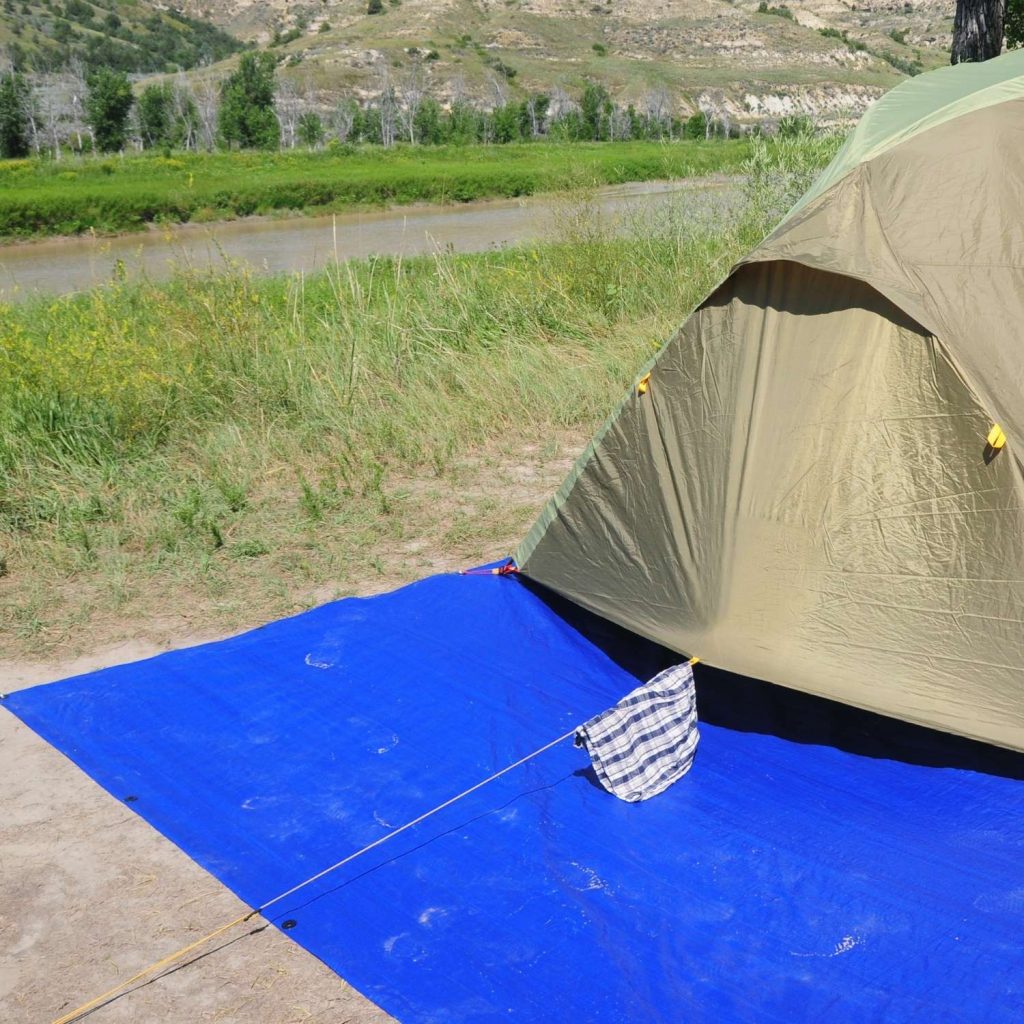
Your footprint should be designed for your tent or sized slightly smaller than the tent floor.
If a tarp extends beyond the edges of your tent, rainwater may collect on the exposed material and run underneath.
That can create a completely different moisture problem.
For more information, read my guide on everything you need to know about tent footprints.
7. Don’t Try to Heat Your Tent to Remove Condensation
When the weather gets cold, it can be tempting to use a portable heater or camping stove to warm the tent.
However, heating a tent is not a safe solution to condensation.
Never use a camp stove, charcoal burner, propane heater, or other fuel-burning appliance inside a sleeping tent.
These devices can create dangerous carbon monoxide, fire, and burn hazards.
Instead, focus on staying warm with the correct sleeping equipment.
Choose a sleeping bag suitable for the expected temperatures and an insulated sleeping pad with an appropriate R-value.
Wear dry base layers and socks to bed.
If you’re camping in very cold conditions, make sure your tent and sleeping system are designed for the weather you expect.
8. Dry Your Tent During the Day
Even with good ventilation, you may wake up to some moisture on the inside of your rainfly.
That’s normal during certain weather conditions.
The important thing is to remove as much moisture as possible before another cold night.
How to dry a damp tent
If the weather is dry, open the tent doors and vents to improve airflow.
Remove wet gear and let it dry separately.
If necessary, use a clean microfiber towel to gently wipe moisture from suitable tent surfaces.
Avoid rubbing delicate coatings or scrubbing the tent fabric.
If conditions allow, let the rainfly air-dry before packing it away.
Sometimes you have no choice but to pack a damp tent, especially when you’re moving to another campsite.
If that happens, unpack and dry it as soon as conditions allow.
Never store a tent wet for an extended period. Trapped moisture can contribute to mildew, odors, and damage to the fabric or coatings.
9. Understand the Difference Between Condensation and a Tent Leak
If water is collecting inside your tent, you might assume the waterproofing has failed.
However, condensation and leaks are two different problems.
Signs that the problem may be condensation
- Water appears after a cold night without rain.
- Droplets are spread across the inside of the rainfly.
- Moisture is especially noticeable near the roof.
- The problem improves when you increase ventilation.
- There isn’t one obvious place where water enters.
Signs that your tent may be leaking
- Water enters during rainfall.
- Moisture appears repeatedly along a particular seam.
- Water drips from one damaged area.
- Rainwater pools on the tent floor.
- You can see damaged seam tape, holes, or worn waterproof coatings.
A tent can also experience condensation and leaks at the same time.
If you suspect a leak, inspect the rainfly, seams, floor, and waterproof coatings according to the manufacturer’s care instructions.
Don’t assume that applying waterproofing spray will solve condensation. Waterproofing products address water penetration, not moisture produced inside the tent.
What to Do If Your Tent Is Already Wet Inside
If you wake up to condensation, there are a few things you can do immediately.
First, open the vents. Increase airflow while keeping rain and snow from entering.
Second, move your sleeping gear away from damp walls. This helps prevent additional moisture from reaching your sleeping bag.
Third, wipe away excess droplets. A small microfiber towel can be useful for removing visible moisture.
Fourth, check your rainfly. Make sure it hasn’t sagged or collapsed against the inner tent.
Finally, dry your gear when conditions improve. Even a short period of drying can help before the next night.
If your sleeping bag becomes significantly wet in cold conditions, don’t assume it’s safe to continue sleeping in it. Wet insulation can lose effectiveness, and you may need to move to a warm, dry shelter.
Helpful Gear for Keeping Your Tent Dry
You don’t need a collection of expensive gadgets to reduce tent condensation.
A few practical items can make a difference.
Microfiber camping towel
A small, lightweight microfiber towel is useful for wiping moisture from tent surfaces and drying small items.
Choose one that dries relatively quickly and is easy to pack.
Tent footprint
A correctly sized footprint helps protect your tent floor from abrasion and damp ground.
Make sure it doesn’t extend beyond the tent’s edges.
Waterproof dry bags
Dry bags are useful for protecting spare clothes, electronics, and other items that need to stay dry.
They can also help separate damp equipment temporarily until you’re able to dry it properly.
Insulated sleeping pad
A sleeping pad with an appropriate insulation rating helps protect you from the cold ground.
It won’t remove condensation, but it can help you stay comfortable without trying to seal every tent vent.
Tent with adjustable ventilation
If you’re shopping for a new tent, look for adjustable vents, mesh panels, and a rainfly that allows good airflow.
For cold-weather camping, choose a tent appropriate for the expected conditions rather than buying one based on ventilation alone.
Quick Checklist: How to Prevent Tent Condensation
Before going to sleep, check these things:
- Pitch your tent on well-drained ground.
- Keep the built-in vents open when conditions allow.
- Maintain airflow beneath the rainfly.
- Make sure the rainfly is properly tensioned.
- Keep wet clothing away from the sleeping area.
- Position sleeping bags away from the tent walls.
- Use a correctly sized footprint.
- Keep dry sleeping clothes separate from wet daytime gear.
- Use appropriate sleeping bags and insulated pads for warmth.
- Dry the tent and gear whenever conditions allow.
Following these steps can help reduce moisture buildup and make cold-weather camping more comfortable.
Frequently Asked Questions
Why is my tent wet inside when it hasn’t rained?
The most likely cause is condensation.
Moisture from your breath and damp equipment collects on cooler tent surfaces as the temperature drops overnight.
Improving ventilation and reducing moisture sources can help.
Should I leave tent vents open in cold weather?
Yes, when conditions allow, keep the tent’s designed ventilation openings open.
Ventilation helps humid air escape and reduces condensation.
Make sure the openings are positioned to prevent rain or blowing snow from entering.
Does a tent footprint stop condensation?
No. A footprint helps protect the tent floor and can provide a barrier against damp ground, but it doesn’t prevent moisture from your breath from condensing on cold tent surfaces.
Ventilation is still important.
Why is my sleeping bag wet in the morning?
Your sleeping bag may be touching a damp tent wall, or moisture may be collecting on the tent fabric and transferring to your bedding.
Keep your sleeping bag away from the walls and check your ventilation.
If moisture appears inside the sleeping bag or on its surface, other factors, including perspiration, may also contribute.
Are double-wall tents better for condensation?
Double-wall tents can help keep condensation on the outer rainfly and away from the inner sleeping area.
However, they can still develop condensation, especially during cold or humid weather.
Proper ventilation and setup remain important.
Can you completely prevent condensation inside a tent?
Not always.
Even a properly ventilated tent can develop condensation when temperatures and humidity create the right conditions.
The goal is to reduce moisture and keep it away from your sleeping equipment.
Is condensation worse when camping in the fall?
It can be.
Cool nights, damp ground, and changes in temperature can make condensation more noticeable during fall camping.
The same problem can occur during spring, summer, or winter depending on the weather.
Final Thoughts on Preventing Tent Condensation
Waking up to a damp tent isn’t a great way to start a camping morning, especially when the weather is chilly.
Fortunately, preventing excessive tent condensation often comes down to a few simple habits.
Choose a dry campsite, keep your tent ventilated, set up your rainfly correctly, and avoid bringing unnecessary moisture into your sleeping area.
A little condensation may still happen, but these steps can help keep your sleeping bag and other gear much drier.
For more cold-weather camping inspiration, take a look at my fall camping activities for adults and my tips on how to sleep comfortably in a tent.
Leave a Reply