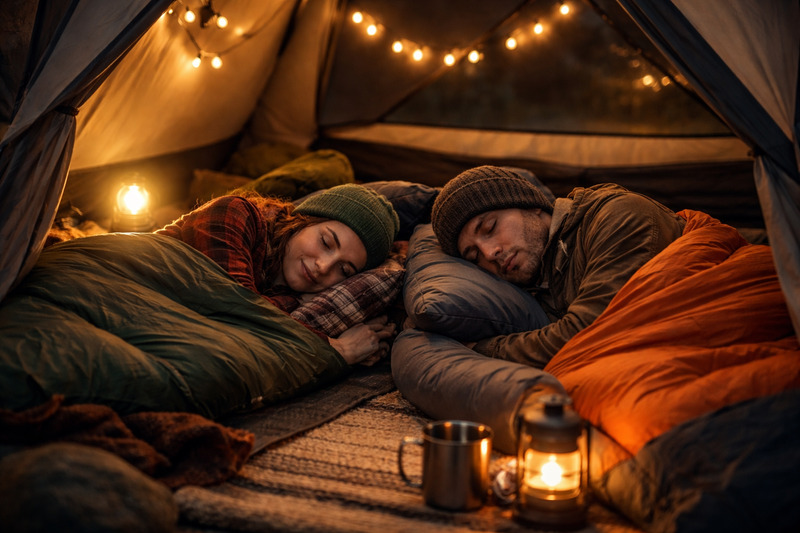
Sleeping in a tent doesn’t have to mean tossing, turning, and waking up sore. With the right setup, smart gear choices, and a few comfort-focused tricks, you can sleep comfortably in a tent—and even wake up refreshed.
How to Sleep Comfortably in a Tent
Whether you’re a beginner camper, a weekend adventurer, or someone who loves the outdoors but not roughing it, this guide will walk you through everything you need to know to get better sleep while tent camping.
Why Sleeping in a Tent Feels Uncomfortable (and How to Fix It)
Most people struggle to sleep comfortably in a tent for three main reasons:
- Hard, uneven ground
- Temperature changes during the night
- Noise, light, and poor sleep habits
The good news? All of these issues are fixable with simple adjustments—many of which don’t require expensive gear.
Choose the Right Campsite First
Before you even set up your tent, your campsite choice plays a huge role in how well you’ll sleep.
Look for Flat Ground
A slight slope may not seem like a big deal, but it can cause you to slide or wake up sore. Choose the flattest area possible and remove rocks, sticks, and pinecones before pitching your tent.
Avoid Low Spots
Low areas collect cold air and moisture overnight. Camp on slightly higher ground to stay warmer and drier.
Pay Attention to Wind and Shade
Set up where trees or terrain can block strong winds, but avoid camping directly under dead branches. Morning shade can also help prevent early wake-ups from heat and sunlight.
Invest in a Comfortable Sleeping Surface
If there’s one area to prioritize, it’s what you sleep on.
Use a Quality Sleeping Pad or Air Mattress
Sleeping directly on the ground is one of the biggest reasons people sleep poorly while camping.
Options include:
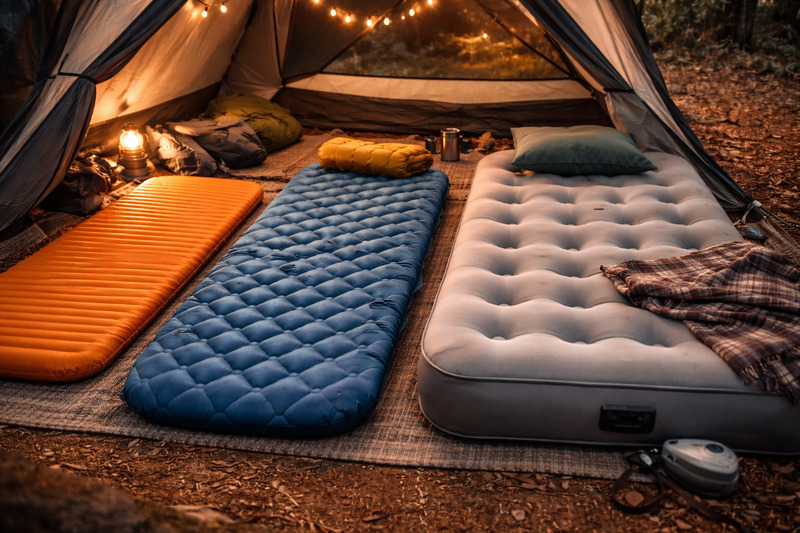
- Foam sleeping pads (lightweight and durable)
- Inflatable sleeping pads (great balance of comfort and packability)
- Air mattresses (best for car camping and maximum comfort)
Look for insulation value (R-value) if you’re camping in cooler weather.
Bring a Pillow (Not a Stuffed Jacket)
A real camping pillow—or even a regular pillow from home—can make a surprising difference. Neck support matters, even outdoors.
Regulate Your Body Temperature
Staying too cold or too hot is a common sleep killer when tent camping.
Choose the Right Sleeping Bag
Check the temperature rating and choose a bag rated lower than the expected nighttime temperature. A 30°F bag is better than a 50°F bag for chilly nights.
Layer Smartly
Wear breathable base layers to bed. Avoid cotton, which traps moisture and makes you colder.
Add Extra Insulation
If it’s cold:
- Place a blanket under your sleeping pad
- Use a sleeping bag liner
- Wear a warm hat to bed (you lose heat through your head)
If it’s warm:
- Use a lightweight sleeping bag or unzip it
- Sleep on top of the bag with a sheet
- Improve airflow by venting your tent safely
Control Noise and Light
Nature is beautiful—but not always quiet.
Use Earplugs or White Noise
Wind, wildlife, and nearby campers can interrupt sleep. Soft earplugs or a white noise app downloaded offline can help.
Block Morning Light
Sunrise can turn your tent into a glowing lantern. Wear a sleep mask or position your tent to avoid direct morning sun.
Improve Tent Comfort Inside
Small upgrades inside your tent can dramatically improve sleep quality.
Keep the Tent Organized
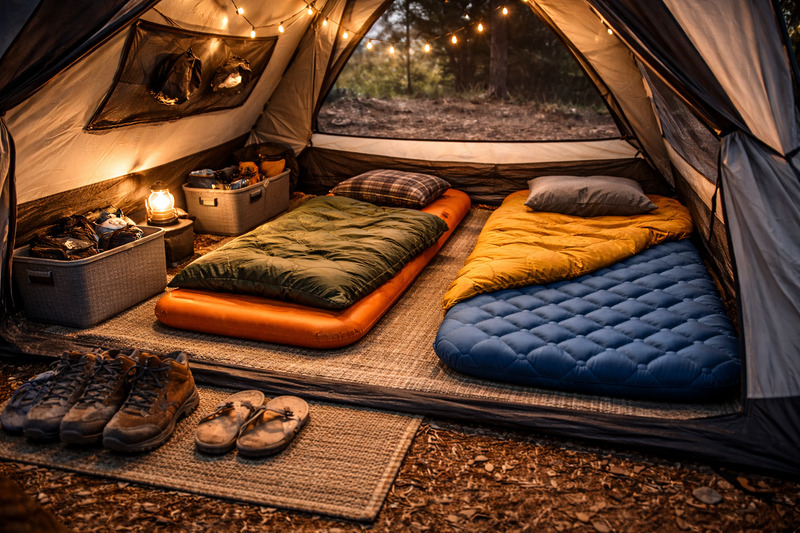
Clutter creates stress and discomfort. Use small bins or gear lofts to keep essentials tidy.
Use a Tent Rug or Foot Mat
This adds insulation, keeps dirt out, and makes the tent feel more home-like.
Ventilation Matters
Crack vents or windows to reduce condensation and stuffiness. Fresh air helps regulate temperature and improves sleep.
Stick to a Simple Bedtime Routine
Your body loves familiarity—even while camping.
- Change into dedicated sleep clothes
- Do light stretching before bed
- Avoid caffeine late in the day
- Wind down with reading or quiet time
These small habits signal your brain that it’s time to sleep, even in a new environment.
Eat and Hydrate Wisely Before Bed
Don’t Go to Bed Hungry
A light snack with protein and carbs can help keep you warm overnight.
Stay Hydrated—But Not Too Much
Drink enough water during the day, but taper off before bed to avoid nighttime bathroom trips.
Bonus Tips for Sleeping Comfortably in a Tent
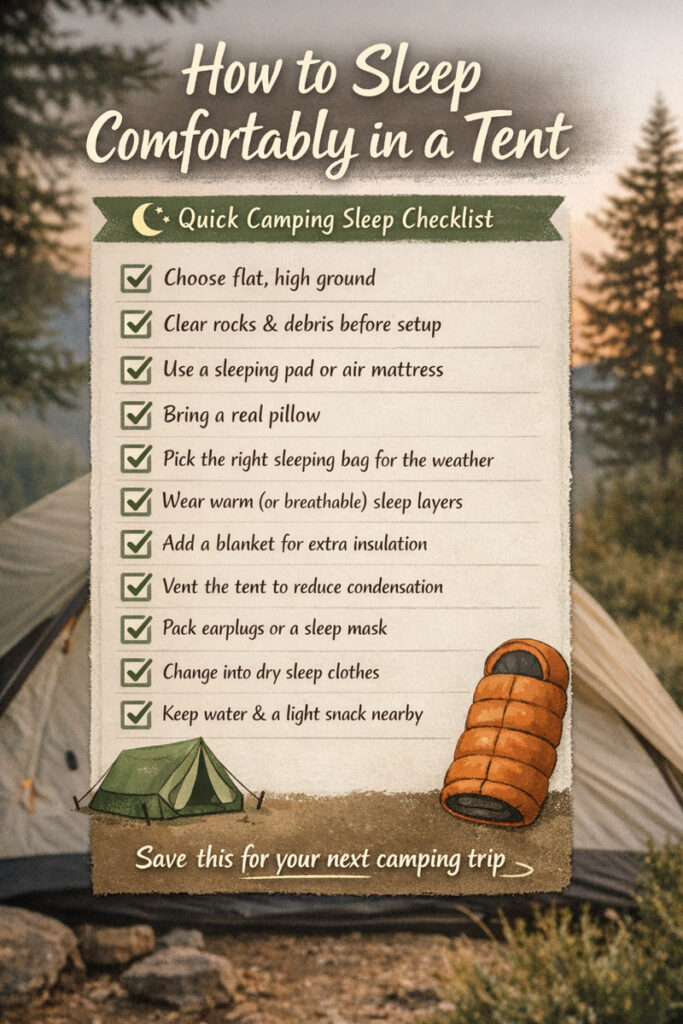
- Bring an extra blanket—you’ll always find a use for it
- Pack dry socks just for sleeping
- Shake out your sleeping bag before bed for maximum loft
- Test your sleep setup at home before your trip
Final Thoughts: Yes, You Can Sleep Comfortably in a Tent
Sleeping comfortably in a tent is less about toughness and more about preparation. The right sleeping surface, proper temperature control, a smart campsite choice, and a few comfort-focused habits can completely change your camping experience.
Once you dial in what works for you, camping sleep can be peaceful, cozy, and surprisingly restorative.
And when you wake up well-rested? That’s when camping really becomes enjoyable.
Leave a Reply